c. 410–160 BCE
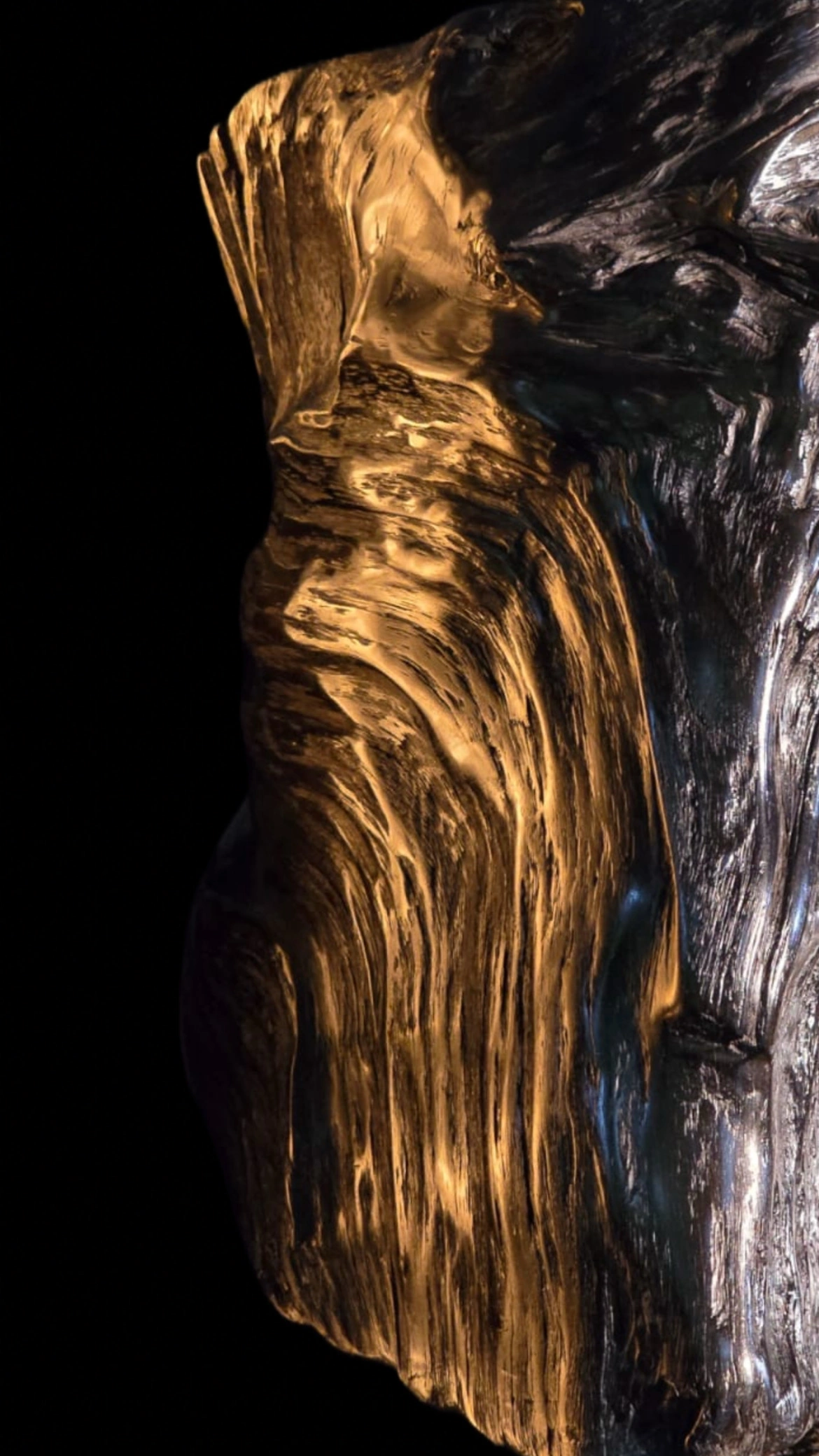 ORIGINAL PHOTOGRAPH · KARTVELI
COLCHIS / GEORGIA
SCULPTURE · PHOTOGRAPHY · VISUAL INQUIRYKARTVELI
SOURCE CODEAncient Colchian oak. Contemporary art.
A living archive of time.
“Art is a collaboration between God and the artist, and the less the artist does, the better.”— attributed to André Gide
Not an artefact.
A contemporary encounter.
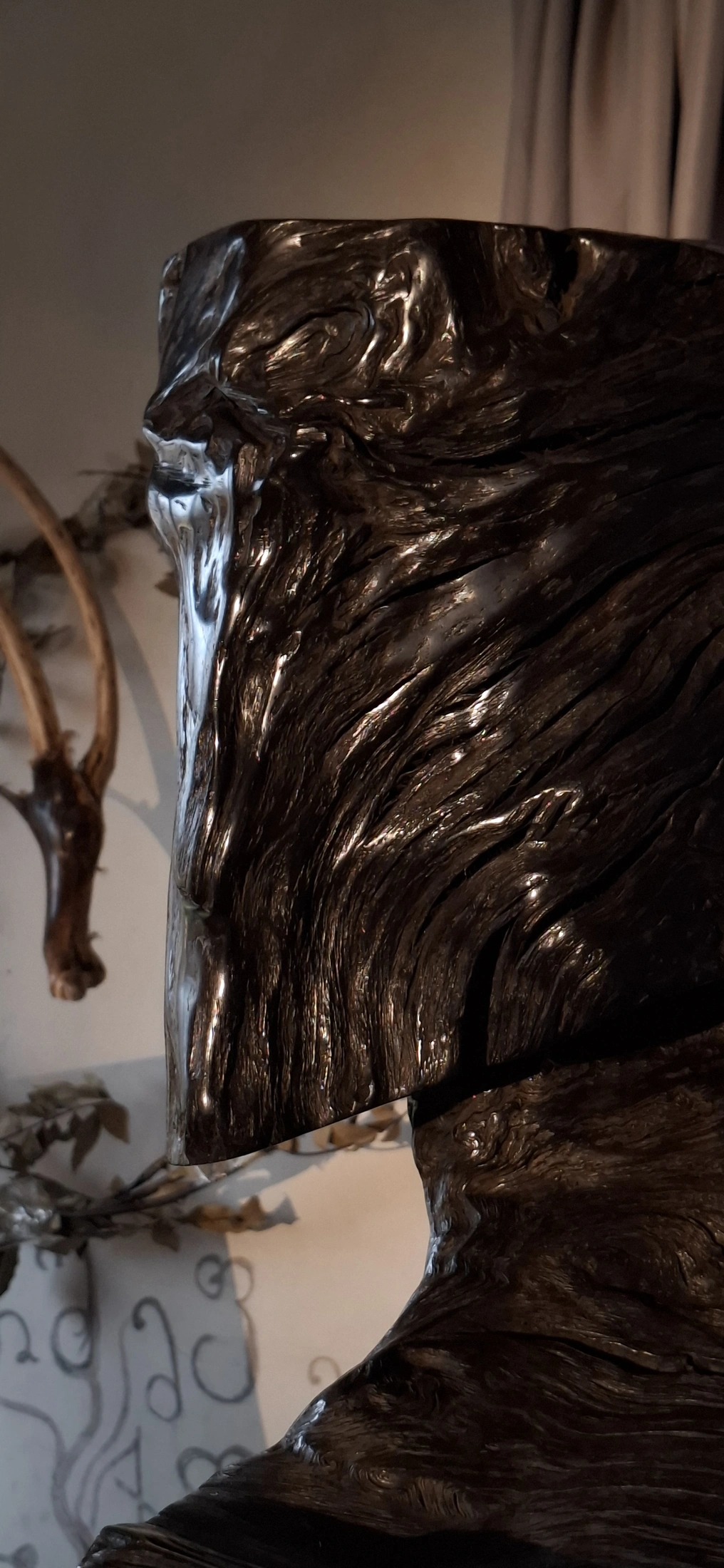
KARTVELI is a sculptural work created from ancient Colchian oak — a material shaped by biological life, water, earth and time. Discovered in river-worn fragments and reassembled by artist Alexandre Kartveli, the work reveals shifting faces, figures and signs as light and viewpoint change. The sculpture is not presented as an archaeological artefact, but as a contemporary encounter with a material carrying the physical memory of antiquity.
02 / The DiscoveryFound by the river.
Found by the river.
Read through time.
Approximately forty river-worn fragments were recovered and assembled during the pandemic. Two principal sections meet at the neck. Their natural form, markings and colour were preserved.
- ~40river fragments
- 2principal forms
- 0chemical colour alteration
FILM 01 / Original footage
The Discovery
Filmed by Alexandre Kartveli during the recovery of ancient oak from the river in Guria, Georgia.
Measured matter.
Careful language.
10–255 and 290–320 CE
Radiocarbon analysis dates the oldest tested wood sample to approximately 410–160 BCE. The measurement relates to the tested portion of the wood and does not by itself establish the exact year in which the tree fell or entered the ground. Before its fall, the oak may already have lived for centuries. Establishing the tree’s full lifespan would require additional dendrochronological evidence.
Laboratory report
English translation ↗
The public facsimile and unofficial English translation remain available. The original report is the authoritative source.
View laboratory report ↗English translation ↗
The tree of memory
and knowledge.
Across cultures, the oak has represented strength, endurance, memory and the connection between worlds. Its roots were associated with ancestors, its trunk with earthly life, and its crown with the sky.
The oak was sacred to Zeus and Jupiter, while Northern, Baltic and Celtic traditions gave it a special place in sacred life.
In the myth of the Golden Fleece, Colchis and the sacred oak are inseparable. Later material explanations remain interpretations, not established facts.
The oak stores time not in books, but in matter.
The oak does not open a physical portal; it opens a portal of perception.
Nature writes.
The viewer continues.
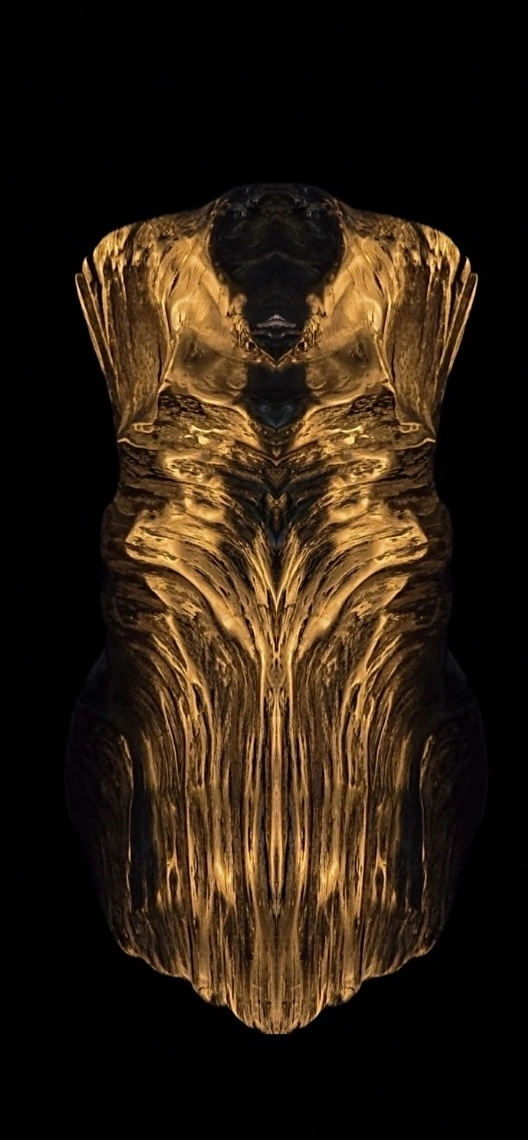
Mirroring, repetition, magnification, tonal adjustment and the joining of details are used as instruments of visual inquiry. The artist does not claim that these images are literal historical messages. They are propositions — ways of seeing and interpreting a material shaped by life, water, earth and time.
We do not create images inside the wood. We search for a way to see what is already held within it.
Nature writes the source code. Time preserves it. The artist recognises it. The viewer continues the reading.
Where the ready-made answer ends, independent vision begins.
Abstract thinking allows the mind to move beyond literal representation and hold several meanings at once.
Abstraction does not abandon reality; it expands the field through which reality can be perceived.
One viewer may recognise a face, another an animal, a map or cosmic matter. No reading is final.
Archive of perception.
The sculpture, its photographic details, and the visual readings they inspire. Documentary images and digital interpretations are presented as distinct parts of the archive.
KARTVELI · Alexandre Kartveli · SOURCE CODE
From ancient memory
towards a living future.
KARTVELI is more than a single work of art. It is the beginning of a cultural and research initiative rooted in Guria, on the land of ancient Colchis. This is not presented as a completed system.
Already in progress
Territory, artistic practice, growing experiments and documentation.
In development
Laboratory, education and research programmes.
Long-term vision
An international centre, exhibition spaces and autonomous infrastructure.
KARTVELI preserves the memory of the past in order to participate in the creation of the future.
From Medea to
integrative medicine.
Ancient Colchis holds a distinctive place in narratives about nature, plants and healing. Medea was represented as a keeper of knowledge concerning herbs and preparations.
The project envisions a dialogue between evidence-based healthcare and carefully studied complementary practices.
The aim is not to replace established medical care, but to investigate traditional knowledge through modern standards of safety, documentation and research.
Observe now.
Shape what follows.
As KARTVELI develops, the project intends to explore new forms of cultural and digital participation. Any future instrument will be introduced only after its legal, technical and financial structure has been clearly defined.
No financial or ownership rights are currently offered through this website.
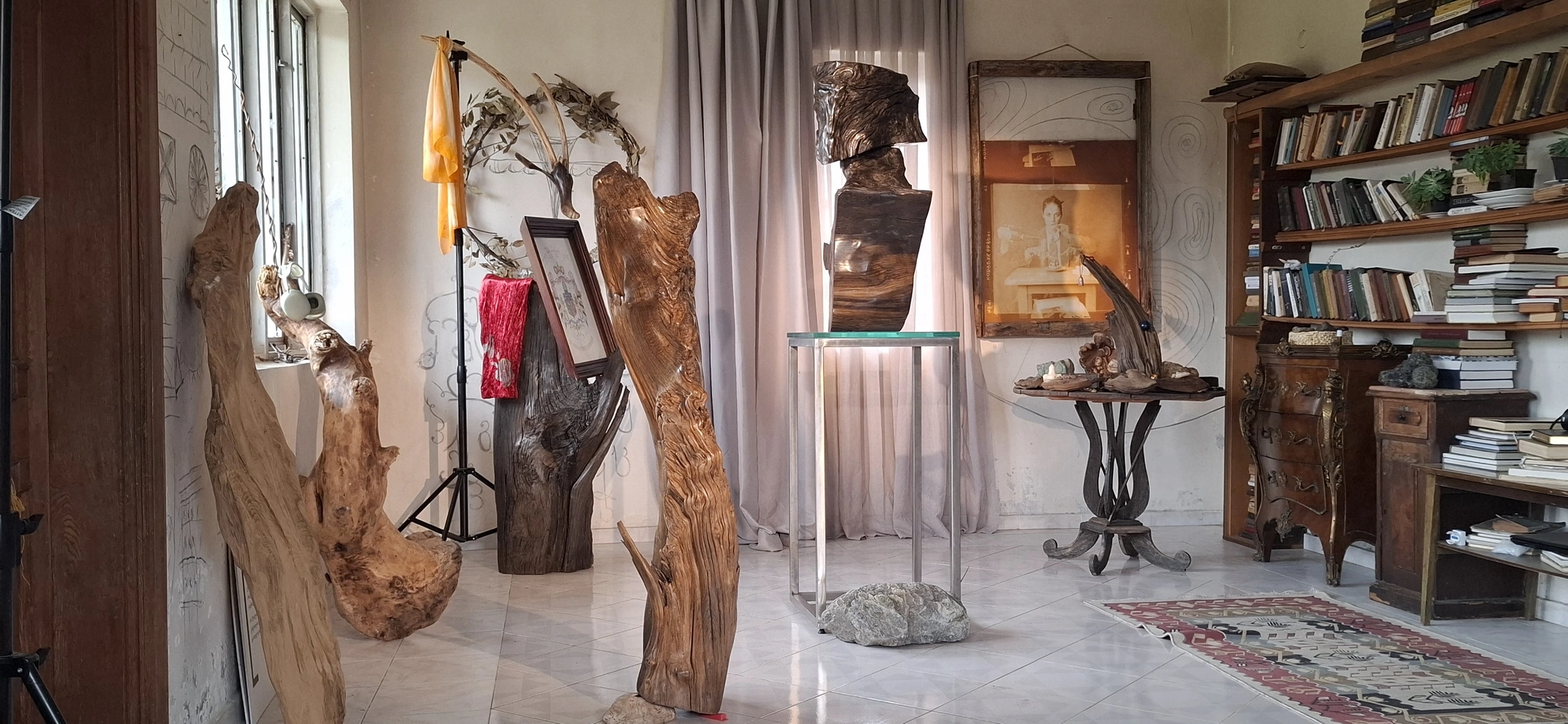
11 / The Artist
Alexandre Kartveli
Alexandre Kartveli is a Georgian self-taught artist whose work explores natural form, ancient material, memory and the boundary between discovery and creation. KARTVELI emerged from a sustained encounter with river-worn Colchian oak and developed into SOURCE CODE — an expanding field of sculpture, photography and visual interpretation.
We offer no final proof and impose no single interpretation. Each viewer is free to continue the reading of the work.